(Pub date 8/11/2026)
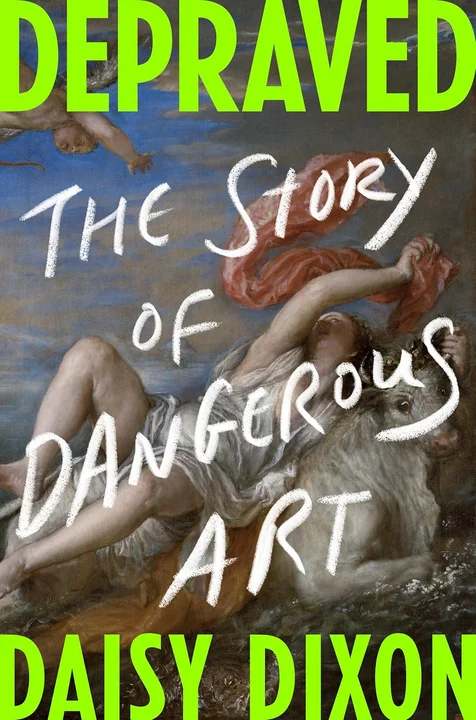
I love me some non-fiction. As somewhat of a professional student (not sure if that should be a brag or an embarrassing admission ¯\_(ツ)_/¯ ), I can’t help my never-satisfied desire to learn more about everything. That being said, this book reads like a master’s thesis, which, granted, has its merits, but I would dare say that most folks are not excited to curl up on a cozy day with….a thesis paper? If you read my review in last month’s newsletter, you may remember that I have been on a roll with rom-coms this summer, and Depraved was an abrupt and distinct separation from the light, gooey romances I have been reading recently.
There is certainly a lot to learn in this book, and valid points are made throughout, though the presentation of the material can be a bit dry at times. However, I love the concept of this book - the idea that we should question our preconceived beliefs about why art is deemed “good” or “bad” - rather than take the opinion of armchair critics as facts.
Depraved takes readers on a tour through history, examining everything from prehistoric sculptures and classical paintings to heavy metal music and video games. Many times throughout the book, I found myself having to pause and turn to the interweb to look up the art piece being discussed. So, if nothing else, it opened my eyes to artworks and artists I had not seen before, but also the concept that video games and heavy metal can be artistic expressions. (I was also shocked to find out what behaviors are exhibited, and, in turn, “voyerized” in some present-day video games).
Can art be dangerous? Who gets to decide what’s offensive? Is censorship ever the answer? Those are the big questions Daisy Dixon tackles in Depraved: The Story of Dangerous Art. Dixon argues that what society labels as “depraved” often says just as much about the culture doing the judging as it does about the art itself. The answer to these questions is drastically different based, not only on the history and cultural context of each society, but also on what we desensitize ourselves to, both individually and societally.
As Dixon put it, “[Depraved art is] a pervasive toxin that we ingest, sometimes without realizing; a kind of hate speech that we don’t always hear or notice. [It] is not going away, but we can learn to co-exist with it in a way that prevents its poison from being ingested. Art shapes our very reality - it molds minds and opens and closes doors for those who are oppressed. Aesthetics and ethics are intertwined from the very beginning, for art-making itself is an ethical pursuit. The aesthetic pervades our moral and social world like air, and we must learn not to pollute it”.
What I appreciated most was that Dixon isn’t interested in telling readers what to think, though she did share her opinions (some I agreed with, some I didn’t). Instead, she encourages us to sit with uncomfortable questions about morality, censorship, artistic freedom, and the power of creative expression. And this book did make me uncomfortable at times. If you know anything about me, you know that I am an animal lover. There was a whole chapter on how animals have been used in, and sometimes killed for, artistic expression. I didn’t know if I would be able to get through the chapter (I did). Even when I didn’t completely agree with some of her conclusions, I was happy to be forced out of my comfort zone and to consider ideas I had not previously examined.
If you’re looking for a light beach read, this isn’t it. But if you enjoy books that challenge your assumptions and spark great conversations, Depraved is a fascinating exploration of why controversial art matters and what it can teach us about history, societies, and ourselves.
reviewed by April James