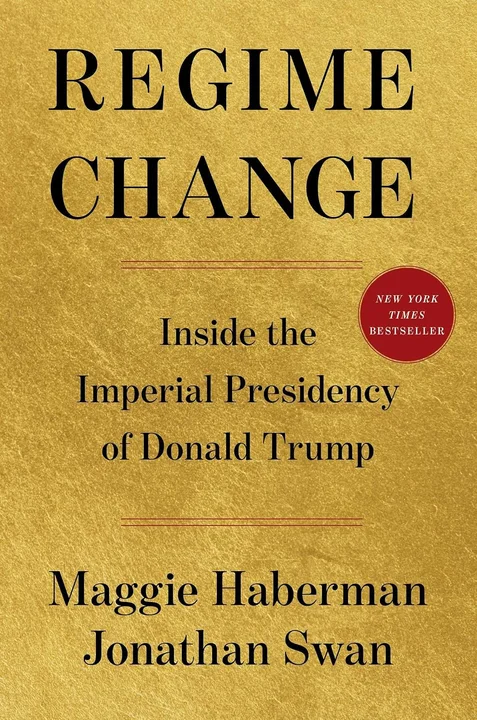
Regime Change: Inside the Imperial Presidency of Donald Trump
Maggie Haberman and Jonathan Swan
Any book about Donald Trump arrives with political weight already attached. Readers often approach such a book with expectations in place. Some expect criticism. Some expect bias. Some expect confirmation. Some expect outrage.That is not the best way to read "Regime Change: Inside the Imperial Presidency of Donald Trump", by Maggie Haberman and Jonathan Swan.
The better way is to read it as a serious work of reported nonfiction — a book about power, decision-making, loyalty, pressure, and the private rooms where public history begins.
That is especially worth considering in July, as Americans celebrate Independence Day. The Fourth of July is not only a celebration of country. It is also a reminder of the obligations of self-government. Citizens cannot govern themselves well if they cannot examine power clearly. That is where "Regime Change" earns its place on the serious reader’s bookshelf.
Haberman and Swan, both veteran political reporters for The New York Times, work in the tradition of Bob Woodward’s most influential Washington books. The comparison is not about style. It is about method.The book examines Trump’s return to power and the governing style of a second administration shaped by experience, loyalty, fewer internal restraints, and a clearer understanding of how the machinery of government can be used.Some of the reporting is striking because it authoritatively places readers where the public rarely gets to stand. The Situation Room and Oval Office deliberations. It traces decision-making around war in the Middle East. It examines border enforcement, National Guard deployments, immigration clashes, and private management of politically explosive controversies, including the Jeffrey Epstein files.
The value of those scenes is that they show how public decisions are often shaped privately — through pressure, calculation, fear of leaks, competing advice, personal loyalty, and institutional strain. The best political reporting helps readers understand how it happened. That distinction matters. Good journalism is not the same thing as political opinion. It is also not artificial balance. Objectivity does not mean pretending every claim is equally supported. It means doing the work: sourcing, checking, weighing, challenging, and resisting the temptation to turn reporting into sermonizing.
Readers may disagree with parts of Regime Change. They may question interpretations. They may dislike the title. They may bring their own conclusions to the material. That is fair. No book should ask readers to surrender judgment. But this book asks something more useful: that readers consider the record.
For Thornwell Books readers, Regime Change is a demanding, timely book for anyone interested in how power actually works when institutions are tested and the difference between public explanation and private reality can be enormous.
On Independence Day, that is not a partisan concern. It is an American one.
reviewed by Allen VanNoppen